

Andy
“Well, howdy there, pahdnuh.” he greeted me as I made my way down the steps into the waist-deep water.
“Hi!” I replied, “Ahhh…this is more like it.” I sighed as I sank down onto the submerged concrete bench. “It’s chilly tonight.”
“Well, boy, I tell ya, I sure am glad fer these here waters. It sure takes the winter stiffness out of the old bones.”
“Yeah, I know what you mean.” I replied.
The sound of water splashing onto the rocks in the overflow basin echoed loudly off the concrete walls as we sat naked, chest-deep in the healing, natural hot spring. Across the room from the concrete bench we shared were hand rails made of steel pipe mounted waist high, and a small transom window over the overflow basin which admitted some light and fresh, desert air.
“My name is Dave.” I offered my dripping hand. It seems polite to introduce yourself when you sit down naked next to another naked total stranger.
“Well, my name’s Andy! Good to know ya!” He responded with a broad grin, enthusiastically, grabbing my hand with a gnarled, sturdy hand, and shaking it properly. Sparkling, alert blue eyes shone from his weathered face, belying his age.
“Are you staying here for the winter?” I asked. This time of year the tiny, remote settlement was teeming with snowbirds, grateful for the county maintained campground and hot springs.
“Well, no, I live here now. For now anyway.” He got a far away look in his eyes and fell silent for a moment. “You?”, he returned.
“No, I live over in Vegas. I’m just heading home after a job in LA. I like to stop in here on the way back and recuperate.”
Again we just sat and listened to the splashing water, lost in our own thoughts.
After awhile, I stood up to cool off a little and crossed to the basin to look in. The outflow for the springs was so generous that the water from the two soaking pools was constantly cycling through, keeping it fresh, and splashing into the runoff basin which is then piped to a lovely, marshy pond across the road which capably supports local wildlife.
Turning to face him, I held onto the railing and sank down to my chin, doing subtle pull-ups in the buoyant water, stretching out the stiffness.
Andy sat quietly soaking, eyes closed, lost in meditation. He looked to be in his eighties and his pale body bore testament to a lifetime of use and abuse. A broken cheek bone and flattened nose showed his face had been re-arranged in the past, possibly more than once. A long scar extended from just above the pubic bone to his neck, with a particularly ugly knot of tender purple scar tissue over his heart from apparent heart surgery. He was adorned with several time-blurred purplish tattoos, now reduced to the appearance of bruises. His right forearm featured the most discernible one, a sketch of a topless beauty in a grass skirt, probably a remnant from some drunken night during WWII.
After awhile, Andy stood up to stretch and cool off a bit. He was visibly hobbling and winced occasionally, though he never complained.
“Boy, I tell ya, this cold weather sure does get me ta hurtin’. Makes it hard to sleep. Glad the pool is open all the time.”
“You OK? Did you hurt yourself?”
“No, just gettin’ old I guess. All the old injuries come back all achy. Well, I’ll be glad as soon as I get ta feelin’ better.” he replied.
“You know, I’m a massage therapist and Reiki Master. I even went to school for it, about five years ago. Maybe I can help you.” I offered. “For free!” I added quickly, “I just hate to see people hurting, you know.”
Andy brightened when I mentioned my skills and excitedly intoned, “Me, too! Well, I didn’t go to school for it, but I do massage, and spinal adjustments, and Chi Gong. Do you know what that is?” He asked, suddenly charged with enthusiasm for exchange and finding a fellow hands-on therapist.
“Isn’t that a Chinese martial Art.”
“Yeah, but it’s really about working with the body’s energies. Have you ever heard of ‘Chi’?”, he asked.
“Yes!” I responded, brightening, “That’s the “Ki” in Reiki. Only Reiki is a Japanese system for healing, working with chakras and meridians, like acupuncture, only with energy. It’s like the “laying on of hands” in the Bible.” I added, gushing with the opportunity to share.
Both of us paused, looking at each other with fresh eyes, pondering the connection, the “namaste”.
Our newfound commonality opened the floodgates and we began sharing and comparing notes from our respective journeys down the healer path.
“My wife Vera and I planned to move here awhile back, for retirement. It’s just too cold back in Iowa in the winter. We was a-gonna do healer work together here. Anyways, before we could settle, she got sick and passed.” he finished with a tightness in his throat and paused to to wipe water from his shaved head and face, though I wasn’t sure all the water on his face was from the pool. After a moment he continued, “I buried her ashes in that little cemetery up in the Heights.” he concluded.
I nodded in acknowledgement, both of the cemetery and his pain.
“Well, sir, I jus’ decided I was a gonna keep on a-doin’ what we was gonna do. So I decided to stay.” He said with forced optimism, a deep-seated trait, I was to discover. “So, I’m staying in a little trailer over here until I figure it out. It belongs to some friends but I got electricity and a phone, so I’m a-doin’ OK.” he declared.
I was still recovering from a decade of grief and loss myself, and felt for the lonesome, old guy, bravely trying to re-invent himself in the middle of nowhere, choosing optimism rather than to languish in self-pity. Admirable!
After sharing more about our lives, we exchanged phone numbers and promised to stay in touch, and I headed back to my home in Las Vegas.
Andy and I became good friends after that, though the 70 miles between us allowed only occasional visits. The next couple of years brought radical change to my life and, after selling the house, I found myself working in San Francisco on a temporary job for a year. The proceeds of the house sale had gone to the purchase of land in Northern New Mexico for my retirement project, an off-grid homestead. Unfortunately the the job in SF ended just as winter began and, since there was nothing to live in there yet, winter quarters were necessary.
By this time, Andy had found a little two room shack in The Heights to rent and had taken in Cora, another resident whose husband had died, and she had grown too blind and deaf to live alone anymore. 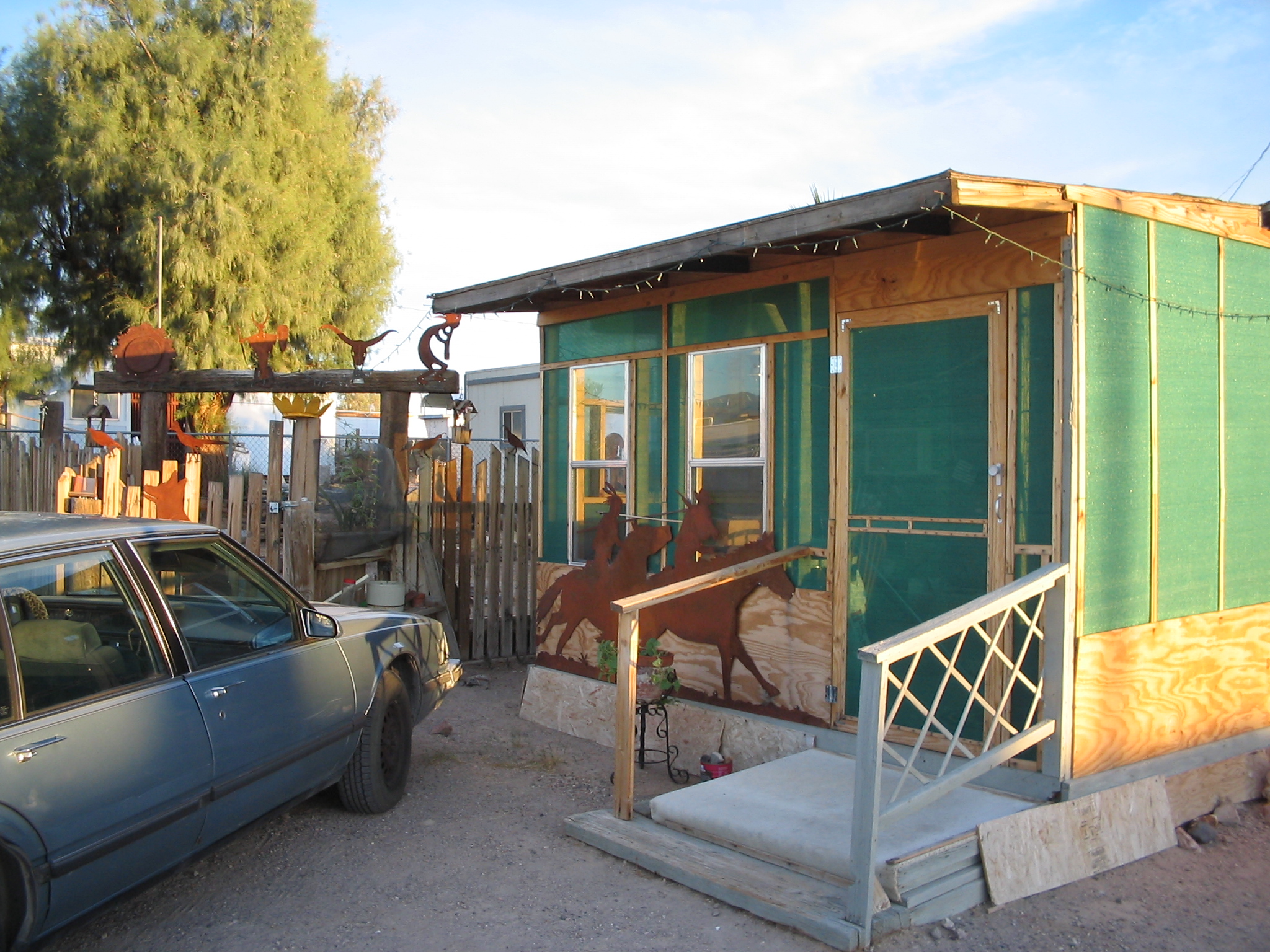 She had been staying in an old converted school bus near the springs, but now shared “Andy’s Shack”, as he called it on the outgoing message of his answering machine, so the bus sat unused at the side of the house. I offered to rent it from her for the winter to which she happily agreed, glad for the extra income.
 It was quite comfortable with a seating area in the front, a little kitchenette in the middle, and a bedroom/closet in the back. The little toilet was unusable as the tank had rusted out. It already had a power cord strung out to it and so we ran a phone extension cord out to it so I could go online with a dial-up service. (This was at the turn of the century and there was no cell service in this remote region near Death Valley yet.)
Andy had become a popular fixture in the little community by then and his reputation as a healer and all-around nice guy was well established. There were no businesses so the springs were the local social center. County maintained (then, anyway) they offered two soaking pools, hot showers and flush toilets. Separate men’s and women’s bath houses were monitored and kept clean by local volunteers and were popular day and night as the literal local watering hole. Though non-potable, the flow was steady and abundant.
The desert can be pretty cold at night in the winter. Sometimes in the evenings, if there wasn’t any wind, Andy would build a little campfire in a stone ring out away from the house, and we would sit by it and stare into the flames, swapping stories under a vast sky of stars. You could see the lights of Las Vegas 70 miles away, but here near Death Valley the darkness was complete. Cora wasn’t much of an outdoors person, preferring to stay in the well lit house and do her crocheting, so it was usually just Andy and me.
“I’m sorry. I forget. Where did you say you moved here from?” I asked him one evening.
“Vera and I moved here from Iowa awhile back. Well, I’ve lived all over, but started in Iowa. My grandfather brought my grandmother from back east and they was a travelin’ west when they got to Utah, and they was lookin’ to settle down. ‘Course, it was all Mormon then, and so then he told my grandmother that the Mormons expected him to take another wife or two and asked her how she felt about that.” he chuckled, “Well, she didn’t much like it at all, and so they packed up and moved right back east to Iowa!” he finished, both of us laughing.
“I was born in Michigan but my folks moved me to LA when I was six. I’m glad now that I didn’t have to grow up with all those winters. The desert suits me better. You weren’t always in Iowa? You said you lived all over?”
“I used to ride the rails back in the thirties. You know it was the depression and everybody was broke, but I got to see lots of places for free.”
“Wow! That’s so cool. But wasn’t it scary? How did you know where the trains were going?” I asked, intrigued at the old time notion of riding the rails like the proverbial hobo.
“Yeah, sometimes it was scary. I just went wherever the train was a-goin’. Sometimes there was others ridin’ in the same car and they wasn’t always so nice. You always had to watch your back. I used to be a real scrapper, though. I could fight ‘em off if I had ta.” he concluded with bravado. His scars and facial deviations supported his claim.
“I liked the refrigerator cars the best. It was cooler. Boxcars are hot and stuffy. And there was always food and water.” He paused to stir the fire and reflect.
“One time they caught me though and they put me off the train in the middle of nowhere. I had to walk for a day just to get to a town, and then had to try to hitch a ride to get home.” he said with a chuckle.
“Is that how you got those scars?”, I asked, pointing to his face, half joking.
“No. That came when I was in the Air Force in WWII.” He said with a scowl, reminded of the incident. “I didn’t like my C. O. A real sonofabitch!”, he spat, “Pardon my French. He used to push me around, actin’ like he owned me or somethin’. Used to get right in my face and shout orders, and give me the worst jobs, and then always complained that I done it wrong. I’d-a done anything if he’d a-asked me but I wasn’t a-gonna do it if he just ordered me around! Well, one day I’d had enough and I told him… I told that guy that I wasn’t a-gonna do it! And HE said you BETTER do it if you know what’s good for you! So I decked him, hard. Well, the next thing I knowed, the MPs were hittin’ me and kickin’ me!” he growled, indicating his broken cheekbone and the scar across his eye.
“I spent some time in the stockade and then got a court martial and a dishonorable discharge, so I couldn’t get no vets benefits.”, he concluded with a scowl. But always the deliberate optimist, he added, “Well, that don’ta matter to me none. I didn’t want to be in the Air Force nohow anyhow. A lotta guys never come home from the war at all. Maybe it was the old guy upstairs just lookin’ out fer me.”
“What did you do after that?”
“Well, I came home and got a job. I used to drive a delivery truck for a long time, until I was plumb wore out. Boy, I tell ya.”
And so the evening went, the two of us swapping stories and watching the sparks rise to join the timeless stars.
Cora 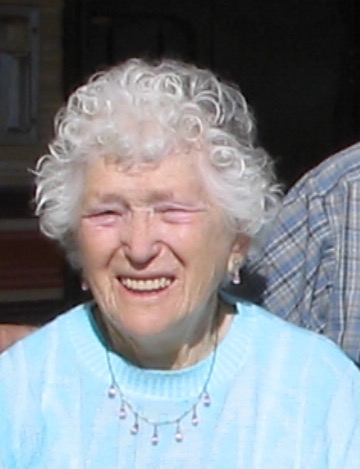
“Daddy was a Volner and Mama was a Smart.” Cora began, spoken in a sing-song manner that suggested that it was the family saying, or joke, and that she had told the story many times over the years.
I had just gotten my first computer and was beginning to put down some of my stories, pounding away on my laptop out in the old converted school bus here in the quiet middle of nowhere. Upon learning of my writing, she asked if maybe I could write down some of her stories. She had given a 200 page handwritten stack of notes to her niece to assemble into her biography, but feared that she had not done anything with it and maybe wouldn’t. I gladly assented and one evening we sat down at the kitchen table in the little shack to begin. She made us tall glasses of iced tea made from precious bottled water brought from town 40 miles away, in the next state, and I turned on my little tape recorder so I could give her my full attention.
“Mama and daddy got married in 1900, when she was only sixteen and daddy was thirty-two. They had eleven children.”, and she proceeded to name every one with their birth and death dates. Alfred, Oma Heart, Emma Louise, Harvey Lon and Hervey Don, (the twins “borned” ten minutes apart) Jim, then Cora, the seventh, then more twins, Opal and Orval, (born when Cora was six) Faye, and Annabelle.
“I was named for my Aunt Cora Woods. There was Aunt Cora and Uncle Charlie Woods and Uncle Henry and Aunt Hattie McCall. They was our closest relatives.”
“Grandpa Smart had a still and everybody knowed about it. He used to drink a lot and sometimes, secretly, Mama liked to join him. Grandpa didn’t trust daddy because he didn’t drink!”, she confided with a snicker.
“I started havin’ to cook breakfast for daddy when I was seven, ‘cuz mama was real sick, then Mama died when I was fourteen and so I had to mother the four young ’uns. Then two years later I walked twenty miles in the hot summer sun with the family to go see Grandma Smart before she died from her cancer. I remember I got twenty yards of printed muslin and made new dresses for all of us.”
“Daddy never went to school and didn’t never learn to read until after Mama passed away… he liked to read the Bible and didn’t have nobody to read to him.
Sometimes he’d spell out words and ask me to pronounce them. I’d lay down, I was so tired, and I’d fall asleep sometimes….I was just a little bitty thing. I didn’t weigh more’n 65 pounds. It’s hard to know how to say ’em when he’d just spell them to me. It’s easier if you can look at the words. I didn’t get to go to school, anyway, so there are a lot of words I don’t know, anyway.”
And so the evening went as she told me the details of her life, her various jobs, her husbands, her children, until it grew late and we called it a night.
A few days later, Cora came out to the bus, carefully picking her way across the uneven ground, proudly carrying an oval tray made from a cross section of a tree, bark intact, upon which was a tottering scene of only partially glued down figures of a Conestoga wagon with assorted plastic horses and cows and buckets that someone had created for her to commemorate her trip in a covered wagon when she was a little girl. Curiously, as she examines her memories, she slips into the phrasing and cadence of a little girl giving a recitation. Clearly, she’s told the story many times before.
(I recorded the next part so it accurately expresses her dialect)
 “Daddy got the wagon in Arkansas for only $35. We took that thing through Nebraska and on the Oregon Trail. I remember it so well,…” she began with a girlish glee tickling her memory, “ …it had a white cloth cover and Daddy had a team of mules,.. no, wait the mules came later. He had a team of those big horses then and he loaded us all up in it and we headed out. I was four then. That was in 1920. There wasn’t much work then, you know, and Daddy was travelin’ around lookin’ for work on the farms. That was about the only thing he knew how to do. There was seven of us kids then: Alfred was the oldest, and then there was Oma, and Ema and the twins, Harvey and Hervey and then Jim and me. Then later on there was the other twins, Opal and Orville. And then there was Fay and then Annabelle.”
“Hervey and Harvey was sleepin’ under the wagon one time and in the night Hervey woke up and could hear a bear gruntin’ and a snufflin’ and it was pitch dark so he couldn’t see nuthin’. Pretty soon he could feel that old bear breathin’ on his face and he just lay there and played dead until it went away.”
“Another time I was sleepin’ in the back of the wagon and I was dreamin’ and rolled out and landed in the mud.”
“Well we got as far as Nebraska and he had hisself a accident. We was goin’ along and we come to a deep canyon. It was so deep that when I saw a train down in there I thought it was a little bitty toy train, that’s how deep it was! Well, Daddy was tryin’ to help the horses around this curve on the edge of the canyon and the one horse reared up and throwed Daddy down and the wagon run over him. He was hurt real bad. His back was broke and there was a lot of blood.”
“These two men came by in their car, their Model A, I think, or T? Whichever one was the oldest… there wasn’t many cars in those days. Their names were Barney and Hayes. They took him to town to a house in town. They was with the railroad and they was real nice to us and told us we could stay as long as we needed to until Daddy was better and don’t worry about the bills right now.
“But then later the doctor came out and looked at him and said that he had blood poisoning in his back where he had a deep cut, just a skin’s thickness from his intestines, and there was nothing they could do, that he was gonna die by the next day.”
“After the doctor left, Daddy wanted some water so my sister Oma and I went out to the spring to get it. Then Oma got to thinking, …and she knew that dogs, when they got an infection, would roll around in the mud and so she went to the riverbank and dug out some clay from behind the spring and then went home and made a poultice and put it on his back and when it would get hot, she would change it, and she did that all night. She and Mama prayed all night and what do you know if Daddy didn’t live. When the doctors asked what they did, Mama and Oma never told.”
“Daddy got a job there working for the railroad later for twenty-five cents an hour.”
I stayed with Andy and Cora until May and then went back to New Mexico to continue with my project. I only saw them once more after that during a brief visit. Andy had contracted brain cancer and, though alert and mobile, was in pain.
“You take care now. I’ll try to come back for another visit soon. I said as I left “Andy’s shack” for the last time.
“Well, I’ll be glad as soon as I get ta feelin’ better.” was his usual reply, waving. “‘Bye now.”
I could see by his expression that we both knew that this would be our last time together.
He succumbed to his cancer shortly after that. I suspect that his ashes are buried next to Vera up in the Heights. Cora couldn’t afford to stay in the shack with only one Social Security check and had to move back to the county park in her school bus. Her dead husband’s brother was recently widowed and moved in with her to take care of her, until he died too, and she was moved up north to a nursing facility. I doubt that she is still alive, but if she was, she’d be 101 today.
All I have left of her is a crocheted afghan she made for me, and her story.
I have pages of details of her life that I don’t know what to do with now, just as I have pages of notes from my own life, telling the story of one who lived and worked and loved and died, to be forgotten as blowing dust.
Here is an excerpt of the notes I made 15 years ago from the tape (now lost) referencing her stories, the details of which I have now sadly forgotten. All of them represent the life of one little girl born in 1916, who traveled to Arkansas in a covered wagon to pick cotton. A little girl who had a horse named Old Pet and a milk cow named Daisy, who grew up and had (and lost) children of her own. A little girl who wanted her story to be told before it died with her.
Covered Wagon trip to Kansas in 1920
Bluing down the well/feeding the cat lye
Cora’s near abduction in Kansas when she was four
Special relationship with Jim
Hervey vs. Harvey – Different twins
Keeping Pigeons – Cora’s trade, and feeding them salt.
Describe The log cabin they started in.
Describe the area incl. Daddy’s 160 acres and Grandma & Grandpa Volner’s adjacent 120 acres
The house burned down in 1929.
Alfred’s saddle pony
The milk cow, Old Daisy
Their work horse, Old Pet
The dogs, Old Ring and Old Rover, the red hunting dog
The cow ate the letter
The time the lady tried to buy one of the younger twins, O & O. Her mother said, “I wouldn’t give a cent for another one, but there isn’t enough money to buy one of them that I have”
Fixing breakfast for Daddy when she was 7, Mama was sick
The winter of the turnips, mom’s last
Mother died leaving Cora at 14 to mother Faye, Anna Orval and Opal
Special relationship with Oma
Cutting cordwood for cash; Alfred, Oma, Harvey and Hervey and Jim and Daddy, after he was better
Picking cotton in Arkansas
Harvey’s fight with the Bully
Hervey died in 1934 at 23 of a burst appendix, leaving a 6 mo. old baby.
The big white house in Marysville, Kansas
Mrs. Ferguson, the schoolteacher
Our stories are our legacy, our markers that show we were here. These stories reveal our connection and our commonality as people making our way through a harsh world, doing the best we can with what we are dealt.
So many lives…so many stories to tell.
What’s yours?
 Hunt Travels