
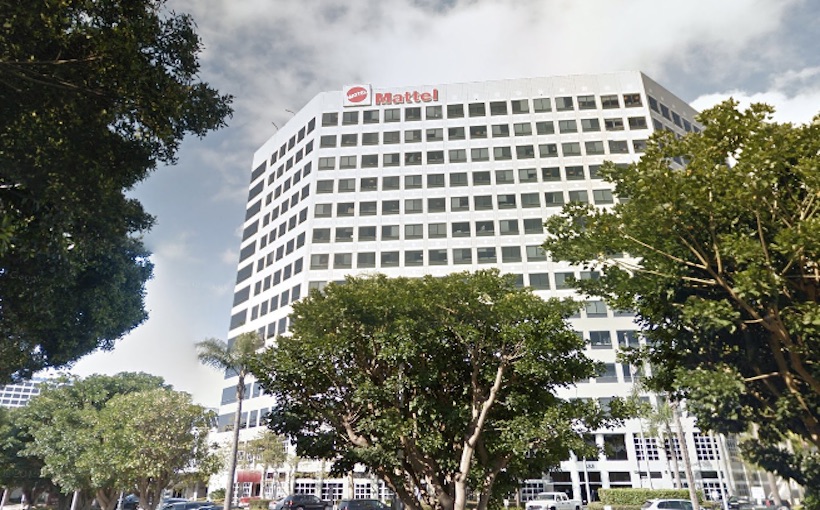
Through a series of lucky circumstances, I landed a gig working free-lance for Mattel in 1984, the summer of the LA Summer Olympics. At that time they were still in their creaking old facility in Hawthorne, CA, and there was no real photo department. They had two regular photographers, but no studio space, so their table top sets were crammed into a store-room accessed through the security office. Everyone else they needed they hired free-lance, project by project. My first job was mostly on location, making line presentations for the upcoming toy fair season and was more of a property master/ photo stylist gig.
Mattel was going through a growth spurt then, however, and soon they got a warehouse facility nearby which was converted into studio space, new full-time staff was added, and a proper photo department emerged under the aegis of the Marketing Department’s Creative Services division. As a set builder, I continued as a free-lancer on a project by project basis, leading to the opportunity to go to London for a month to complete the International Catalog the very next year. After that the Samples Department drafted me to make miniature sets for their Toyfairs in New York and Monte Carlo.
PHOTO DEPARTMENT
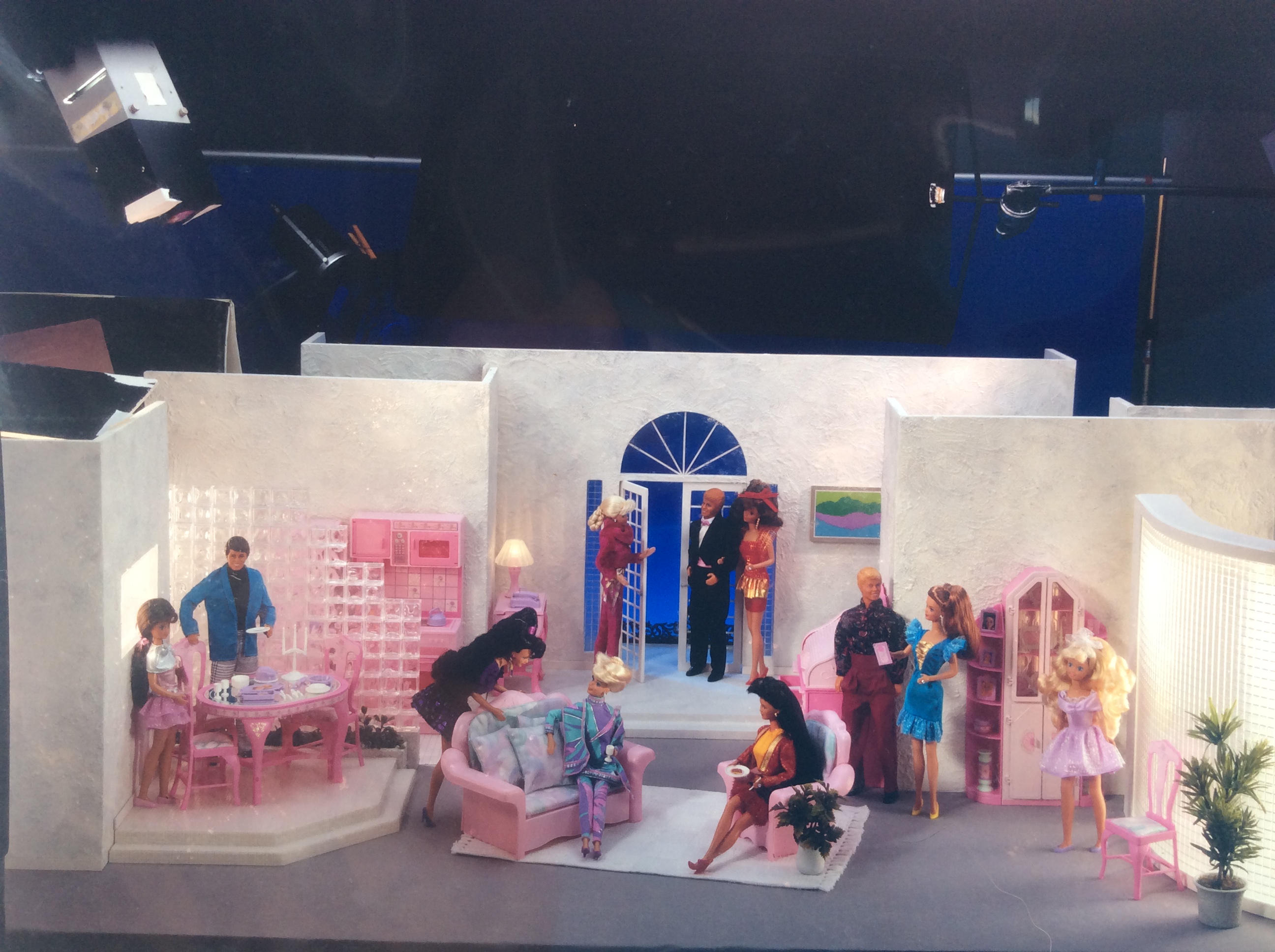
Most of the time I was working in the Photo Department, though, making table top sets for catalog and packaging photography and such.

I’d make such things as a living room set for them to pose the latest version of Barbie and her new furniture line, or a moonscape for Astronaut Barbie.

Or a Hot Wheels futuristic city with lighted domes.
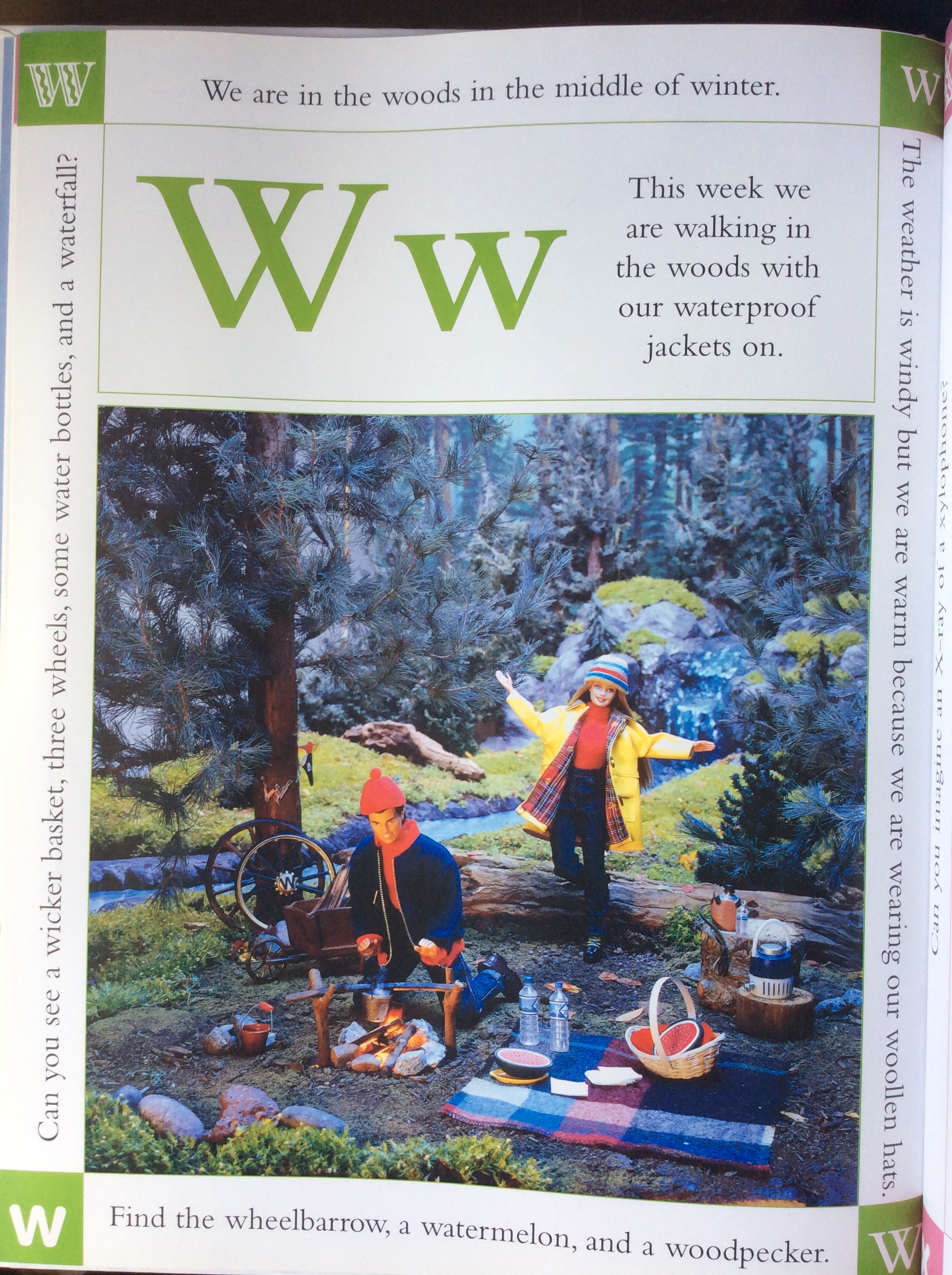
 One of my specialties was making miniature trees and foliage, Barbie scale. (Which is roughly 2 inches to the foot.) I was their go-to tree guy and eventually there was a miniature forest in the prop room. The more modular sets I built, the more there was to draw from for future shots.
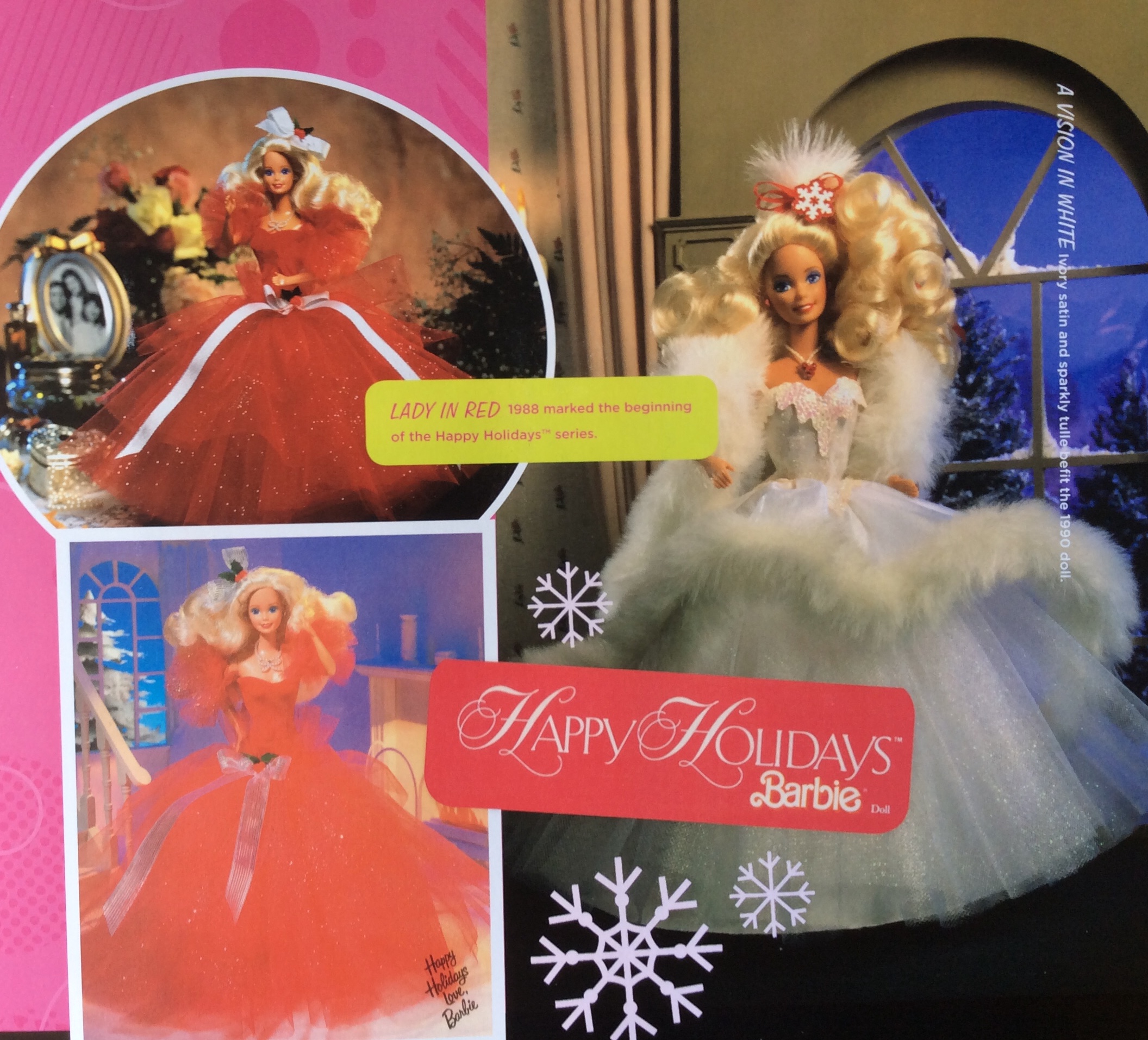
My sets were on the package for the first Holiday Barbie, the success of which led to a new edition every year, and eventually paving the way for an expanded collector doll series.

Some of my favorite sets were for the collector catalog which demanded more attention and featured more realistic and elegant sets than the basic production Barbie. Wardrobe was often designed by top designers such as Bob Mackie and Halston and sometimes the Barbie character gave over to special edition collector dolls featuring the likes of Audrey Hepburn, Lucille Ball, and Elvis.
Unfortunately, the shooting schedule was usually so tight, we often shot a set a day, leaving me scrambling to wrangle today’s set while simultaneously shopping for and building tomorrow’s set. This led to some very long days.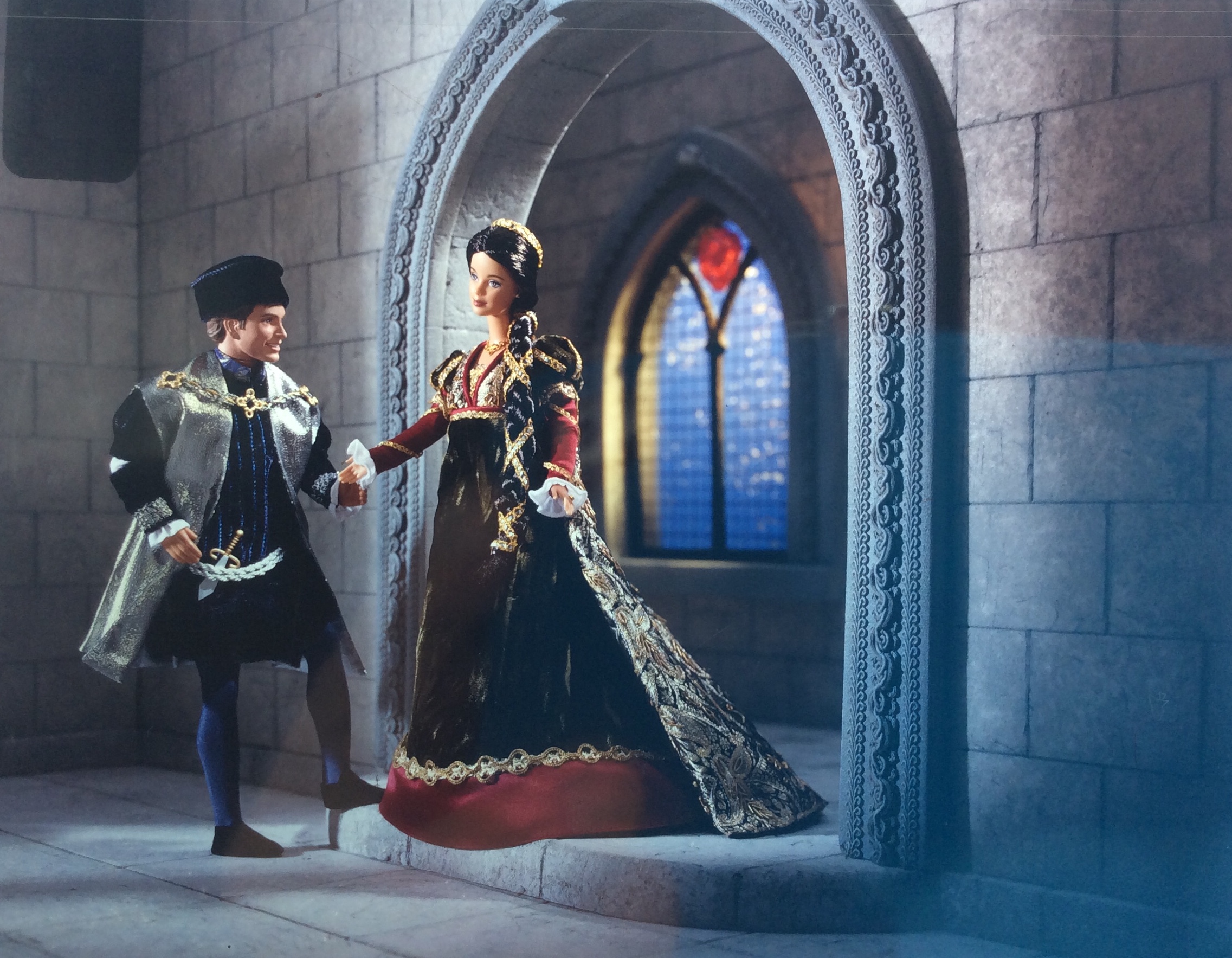

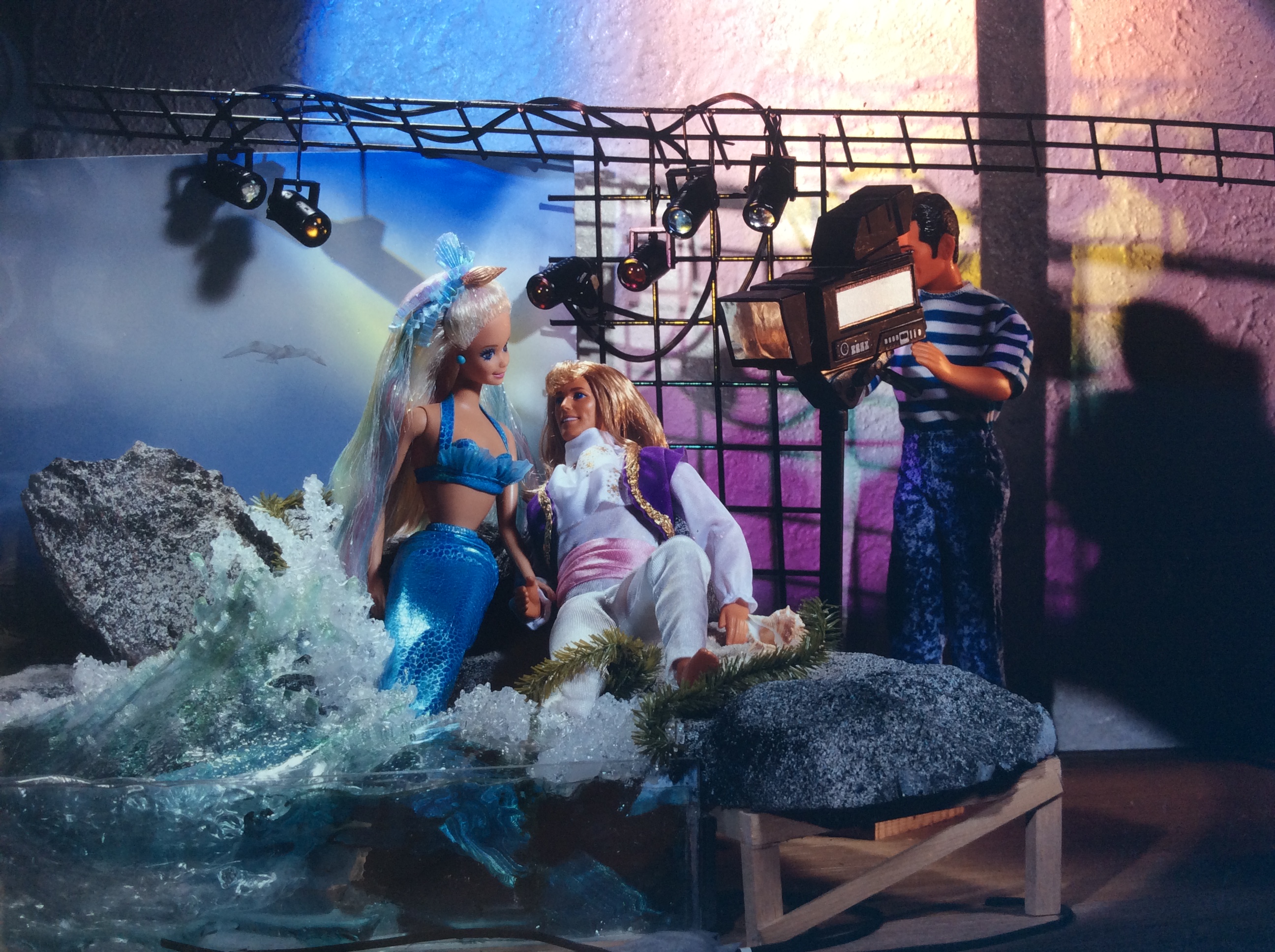
Later projects involved doing the sets for the illustration photography for different series of children’s story and educational books featuring a licensed Barbie, sometimes dressed as characters in the story.
These sets were far more elaborate and detailed than the simpler catalog and packaging photography, as they told a story, sometimes including extra characters unavailable in the Barbie pantheon and on a few occasions I had to modify some dolls to match characters, re-sculpting their faces to be older or bald, or cutting their legs down for height variety. Luckily there was another photo stylist who was a brilliant Barbie scale costume maker to complete the transformations.

BARBIE BOOMS
I had always felt a degree of social guilt for helping to perpetuate a questionable role model such as Barbie, but there was a new drive in the eighties to change that perception, due to a large extent by Jill Barad who was put in charge of the Barbie line in 1982. Not entirely for altruistic reasons, she sought to make Barbie a more effective role model by breaking the glass ceiling with the motto, “We Girls Can Do Anything”. 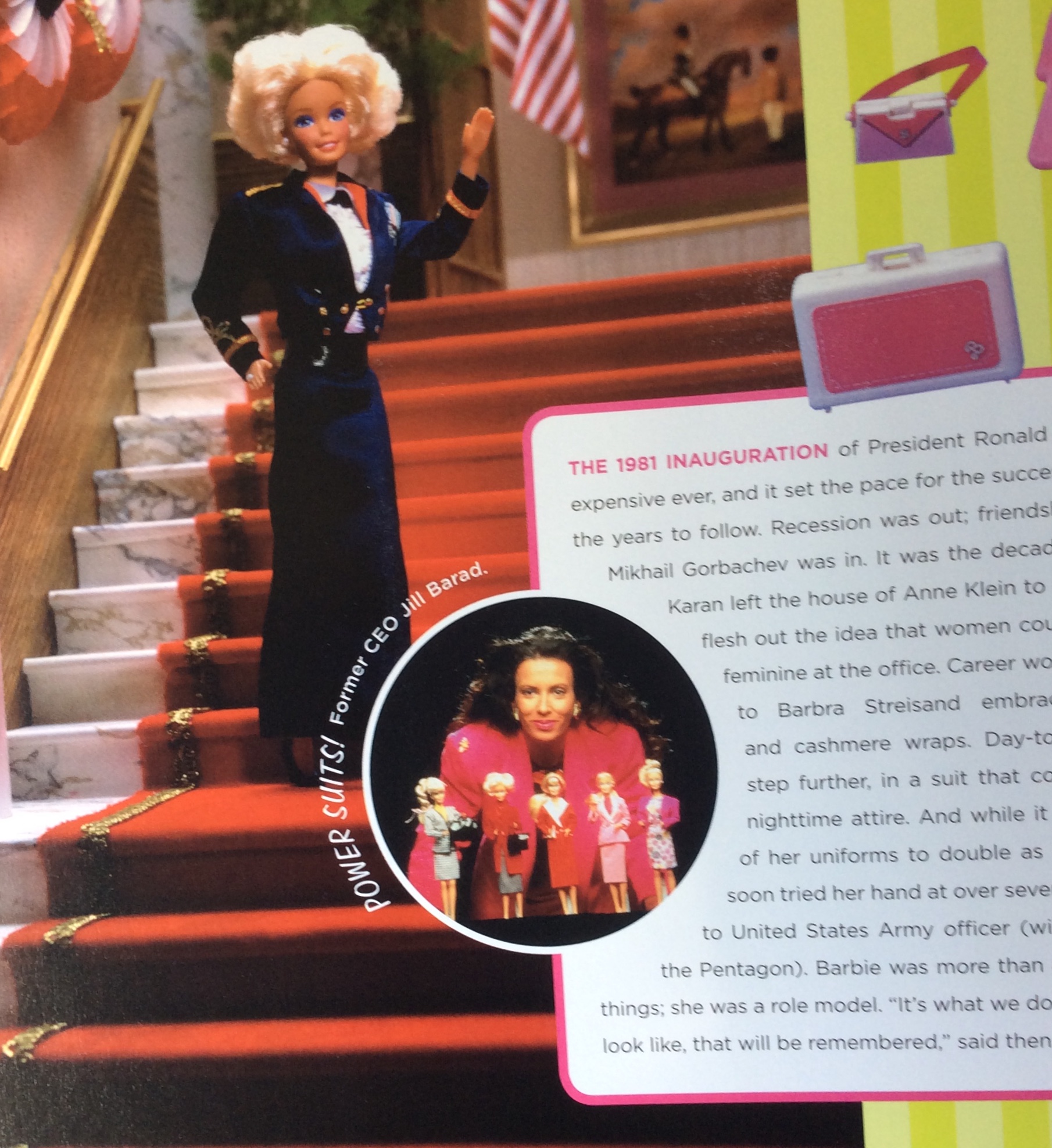 The formerly struggling product subsequently rose to $1.4 billion by 1995, or 35% of their gross. An unnatural reverence for the doll emerged within the company as a result, and the iconic doll began to be referred to as “she” and treated with a certain reverence as though she were a real, almost supernatural being, her look, personality traits, and style being defended as inviolate. “Oh, Barbie would NEVER wear THAT!” A staff of stylists would spend exhausting hours grooming the dolls, styling their hair perfectly and attending to fine details. There was even an officially approved color shade called “Barbie Pink” (which was disturbingly like Pepto Bismol, to which I have a visceral reaction.)
 Barad’s aggressive corporate business and marketing methods successfully changed the brand and propelled her own rapid rise through the ranks ultimately to CEO in 1997. Except for having dark hair, her persona matched Barbie perfectly; a self-possessed rich white girl with the extravagant makeup and wardrobe, the fancy cars and houses, and her charming, albeit disingenuous smile, all made her the perfect spokesperson for the line. She was reshaping Barbie in her own image.
One of her strategies to grow the company was to acquire floundering companies and pirate their products as their own. They would make line presentations of new products to be introduced using one-of-a-kind prototypes to see if they get enough positive response, and orders, before actually putting them into production.
I was working on a set at the back of the photo studio one time, late eighties, maybe early nineties, when I happened to notice one of the products, a boys toy recently acquired from a British company, which was sitting on a side table, waiting to be shot. The $20,000 prototype, a play set for posable action figures, was of the top half of the Statue of Liberty, not unlike the last scene from Planet of the Apes. It was a post-apocalyptic scenario where the country has fallen, and the Statue had been turned into a fort for the special guerrilla forces “defenders of freedom”. Her face plate popped open to reveal cannons and the command center. There was a helicopter pad on her head and warriors rappelled down from the torch to waiting battle vehicles. It was SO offensive to my principles that it took every bit of self-control not to pick the irreplaceable prototype flown in from England and smash it to the ground. (And pretend it was an accident, of course.) It was the WORST kind of child influencing toy imaginable to my mind.
 But it would surely have ended my career with Mattel, and possibly my own liberty, so instead I spoke up and made its reprehensible tenets widely known amongst the employees, hoping it would hit the grapevine and eventually reach the “suits” in “The Tower”. C’mon people, we have a responsibility to the world here! Ultimately they never produced the toy so apparently somebody else saw it for what it was, too.
TOYFAIRS
The most important events of the year were the Toyfairs. For those of us who had to actually put them together, they were annual death marches, but the compensations tried to bolster your courage. The pay was good and the overtime phenomenal. (The NY Toyfair alone made up a third of my yearly income.)
Plus, you got to play with toys! Well…work with them anyway.
They would put you up in nice hotels like the Waldorf, but then worked you so hard that you never saw your room. You got a per diem but never had time to stop to eat. You got to travel, but it was really more of a chore than an adventure.
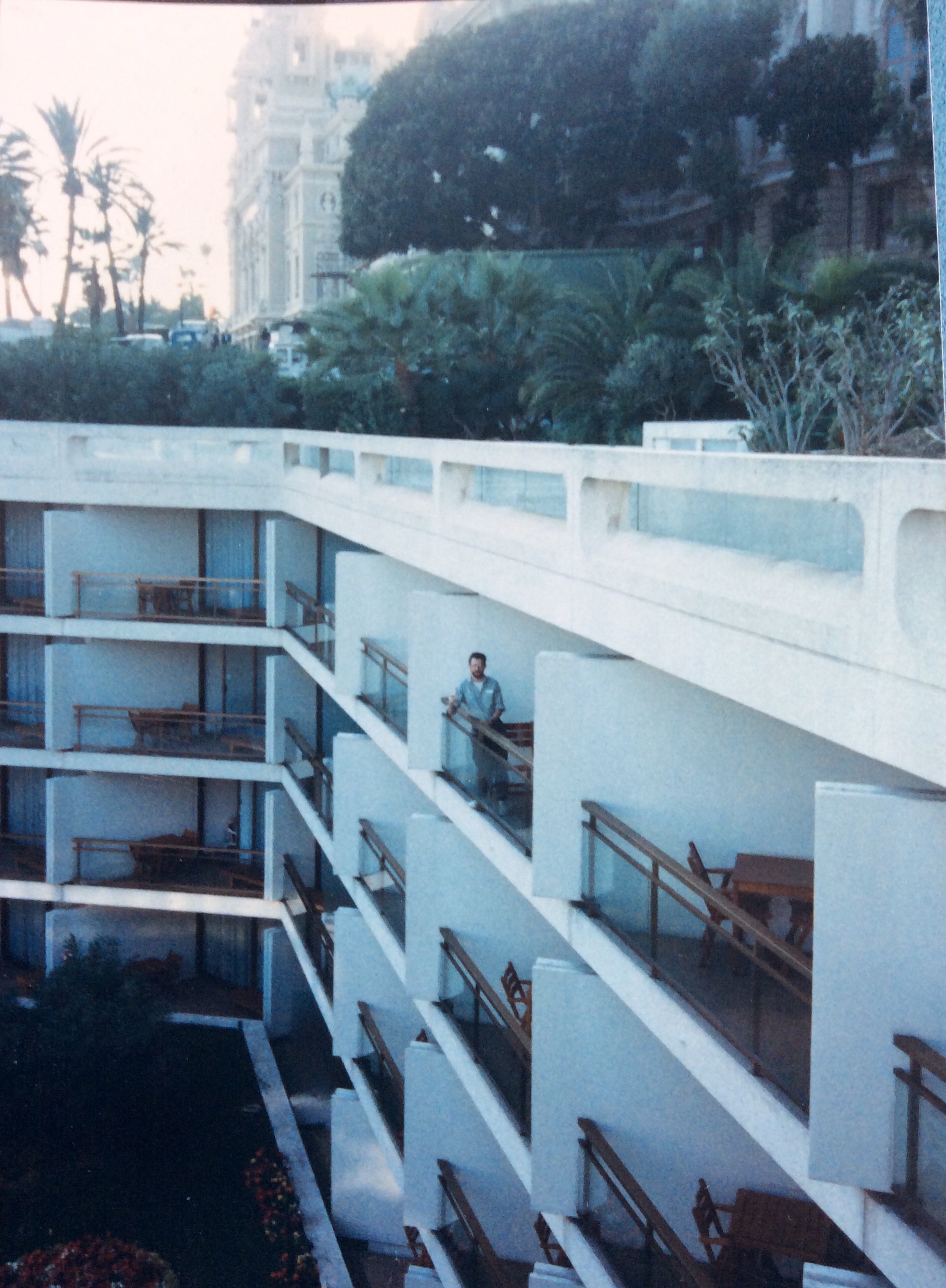
The last time we did the International Toyfair there, the trip from LA to Monte Carlo took me, literally, 24 hours with layovers and plane changes, lugging my heavy suitcase and toolbag, which had to clear customs. Then we pretty much never left the building as our rooms were upstairs from the showroom and we generally ate in the lobby cafe. The only outing was the one day trip to Nice, in the next country, to do our shopping for supplies as, unsurprisingly, there were no hardware or fabric stores in Monte Carlo.
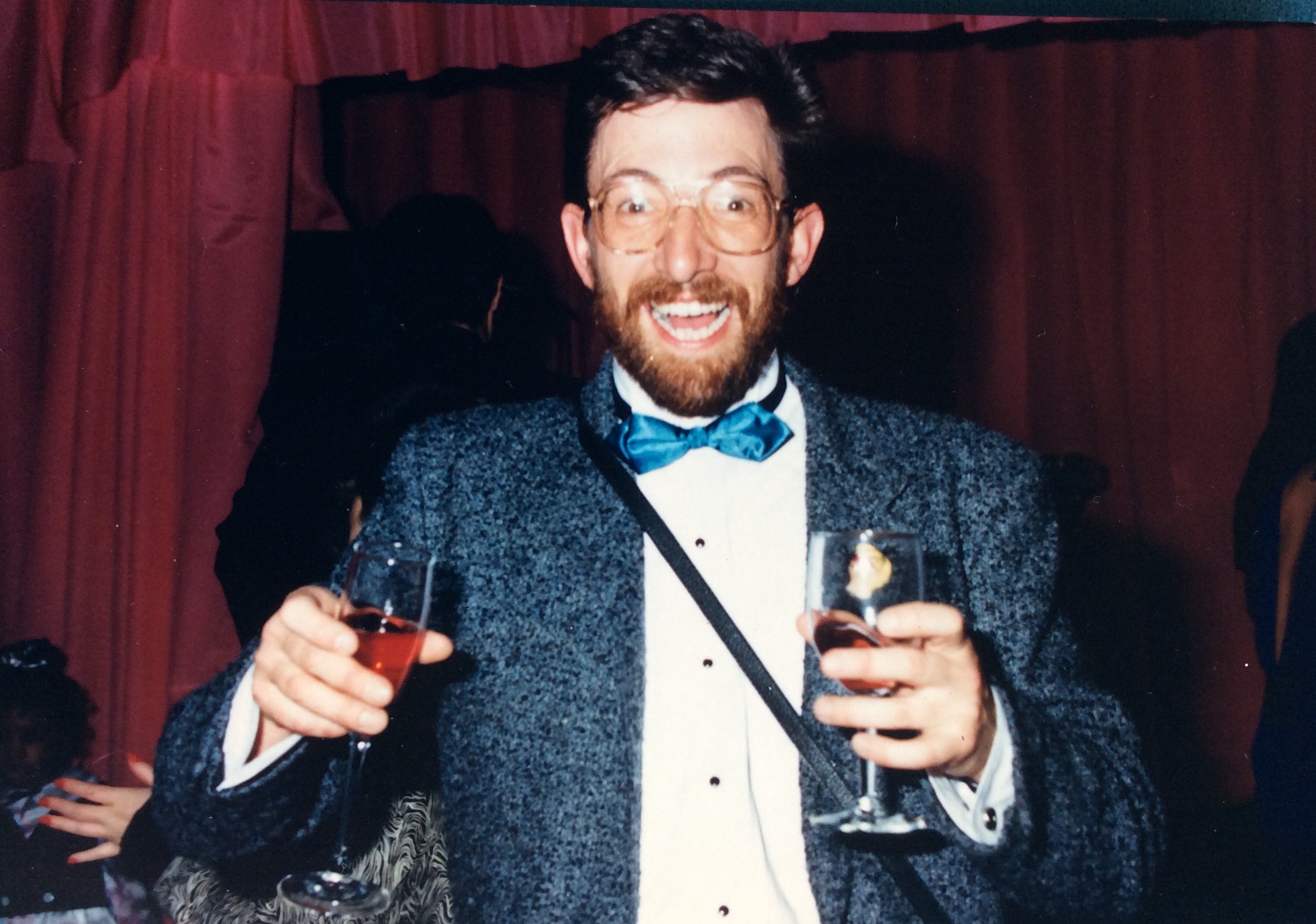
One fun memorable event, however, was the Barbie 30th Gala at Lincoln Center in 1989. Created in 1959, the doll turning thirty was a perfect opportunity to celebrate, and publicize, its newfound success and a gala event was thrown at Lincoln Center. They rolled out the pink carpet and pink champagne flowed freely.

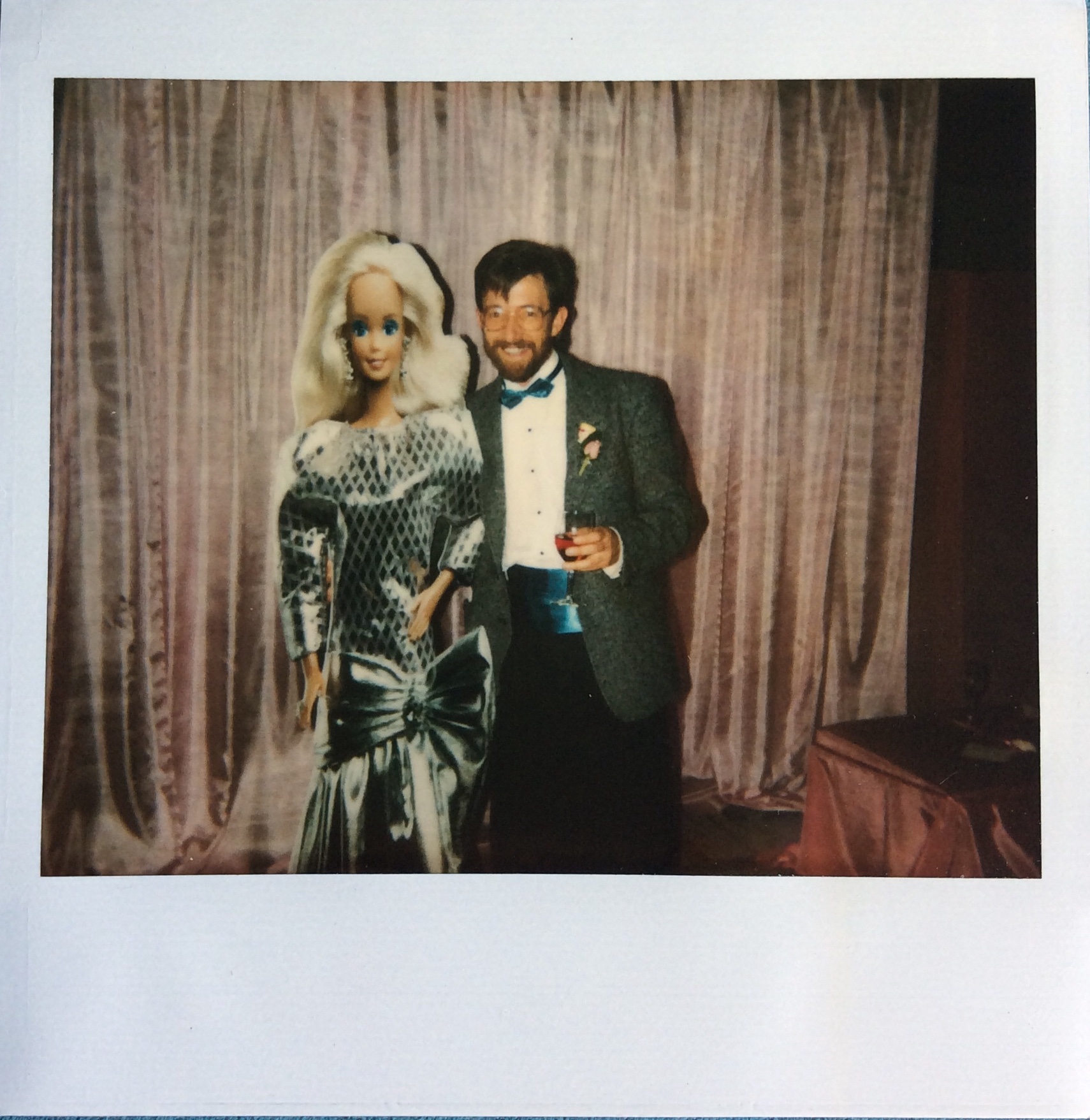
There was a life-size cardboard cutout of Barbie in a special gown designed just for the occasion that you could have your picture taken with. (Barbie and I made a cute couple.) The same gown was reproduced on just fifteen hundred special edition dolls which came in a white box tied with a pink ribbon, and were distributed to only guests of the event. (Those rare dolls are now worth a small fortune.) As mere crew people, we were snubbed from the guest list, typical of Jill’s regime, so we dressed up and crashed the party anyway. Not surprisingly, security was lax, nobody noticed, and we deservedly enjoyed the break from the salt mines.
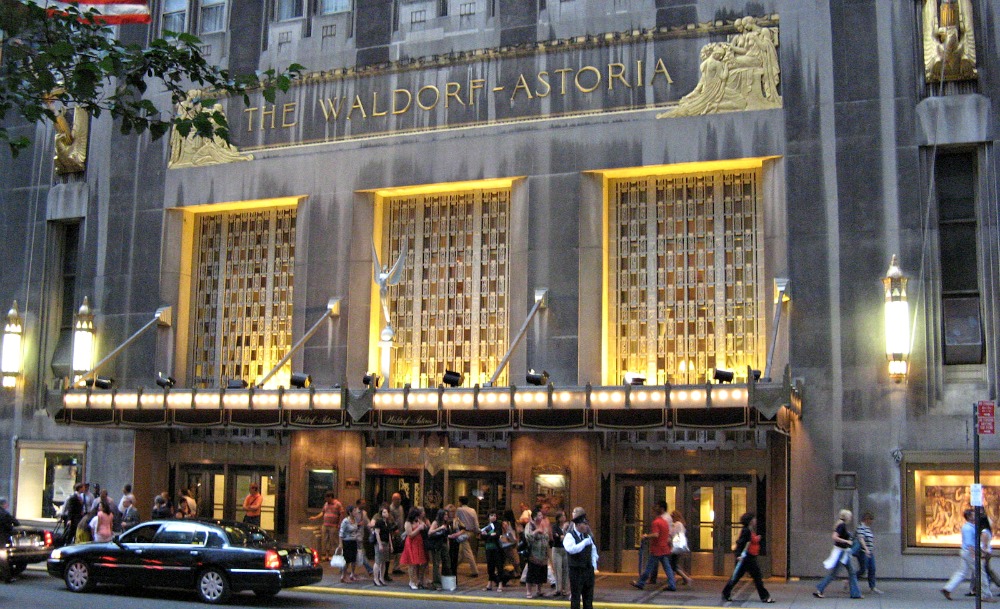 Another memorable moment had nothing to do with Mattel. President Bush and Gorbachev met together in Manhattan in 1991 and coincidentally both stayed at the Waldorf at the same time that we were staying there for Toyfair. I’d come home late, disheveled and trailing disco dust from the Barbie gallery, while passing Secret Service men in the lobby casually scrutinizing us and talking into the sleeves of their black suits and trench coats. It seemed pretty certain that our pictures had been studied and that our rooms had been thoroughly searched while we were gone to work and there was a general air of tension with everyone. Looking down from my window, I could see that both side streets were blocked off and filled with black town cars and limos and there was a line of uniformed police standing shoulder to shoulder, all around the block.
Intense!
NYTF
 Toyfairs were the most aligned with my theater training. They were shows that had to travel, involving extensive sets, lighting, scripting, designers, directors, actors, long hours, and an inflexible opening date. The stakes were high as most of the year’s orders came from these shows. Failure was not an option. The problem was there were WAY too many directors.
Each product had its own space in the complicated maze of rooms that made up the gallery. Each product also had a manager and staff responsible for their areas, whose jobs literally depended on the success of their products. (This was one of the criticisms of Jill’s reign was that she kept firing staff if they either fell short of her expectations or challenged her vision and decisions, and then replaced them with inexperienced, terrified product managers who had something to prove. It was also a component to her later downfall.) The burgeoning corporate structure made everything about competition, numbers, and return, de-humanizing what had been a fun, garage-born toy company named for the children of the founders, and creating an atmosphere of fear as everyone scrambled to make their products shine…or else.
We’d fly in from California to the dead of winter and hit the ground running. The New York show was the biggest, most important one and a limiting budget was essentially non-existent. So much depended on the success of these shows that the sky was the limit. Got a problem? Throw money at it. This led to some wild expenditures and shocking waste. The work schedule was daily for two or three weeks with no days off. It always began civilly with reasonable hours but by the end it was around the clock exhaustion.
A large part of the problem was changes. We would kill ourselves trying to make the opening deadline with the already approved plans, when, a few days before the opening, the marketing babies would fly in from the coast, fresh, tanned, and caffeinated and, in their inexperience driven panic, start making ill-advised changes, too often capricious and aesthetically questionable.
The competition and power displays might have been laughable except that we were the ones who had to undo weeks worth of work in mere hours to accommodate the clueless marketing children. Egos, posturing, and fear led to small feuds for space in the gallery. In one instance the marketing VP of one product insisted that a particular wall be pushed back six inches. But that meant losing six inches from the next room, which was somebody else’s space, and which also had custom cut mirrored walls imported from out of state. Also, the carpet was custom installed for each room requiring replacement, not to mention having to reset all of the lights. This particular instance was resolved by a higher up veto, but I recall another such a feud between two product lords which resulted in the walls moving three times in a display of power and control. Like we didn’t have enough to do delivering what they had already signed off on months ago.
I was assigned to the decorator crew and did tabletop sets to display the products. The large set pieces were manufactured by a production company in Arizona and trucked to the New York showroom on Sixth Avenue in Manhattan. (Because Mattel is such a large company with a huge line, they’ve outgrown the Javitz Center and have to have their own showroom.) Then I would come in and make little worlds scaled to display the products. (I had to get a special dispensation from the mob, I mean union, boss assigned to the project, since I wasn’t NY union, but brought a specialized skill and used my own tools.)
One time, the night before opening, I stayed until five AM to finish a cool jungle room for some little powered dune buggy-like cars. The table had motorized “reveals” which turned around, which I camouflaged with miniature jungle foliage. I came back a few hours later, just before they opened the doors, to gather tools and do a final check, only to find that the marketing baby had come in early and decided that things didn’t match the order he wanted, AND HAD RIPPED EVERYTHING OUT! It looked like a category five hurricane had hit! He was just standing there amidst the confusion as they opened the doors downstairs to the buyers, fumbling around, trying to make the set match his closed mind, rather than just change the script.
Insane!
Some products, of course, commanded more authority, and naturally Barbie was at the top of the list (The line comprised 35% of Mattel’s gross revenue by ’95.) As the lead product, the entrance to the gallery was through the Barbie gallery. The gateway was a room dedicated to the big new item of the year and in 1990 it was the Barbie Magical Mansion.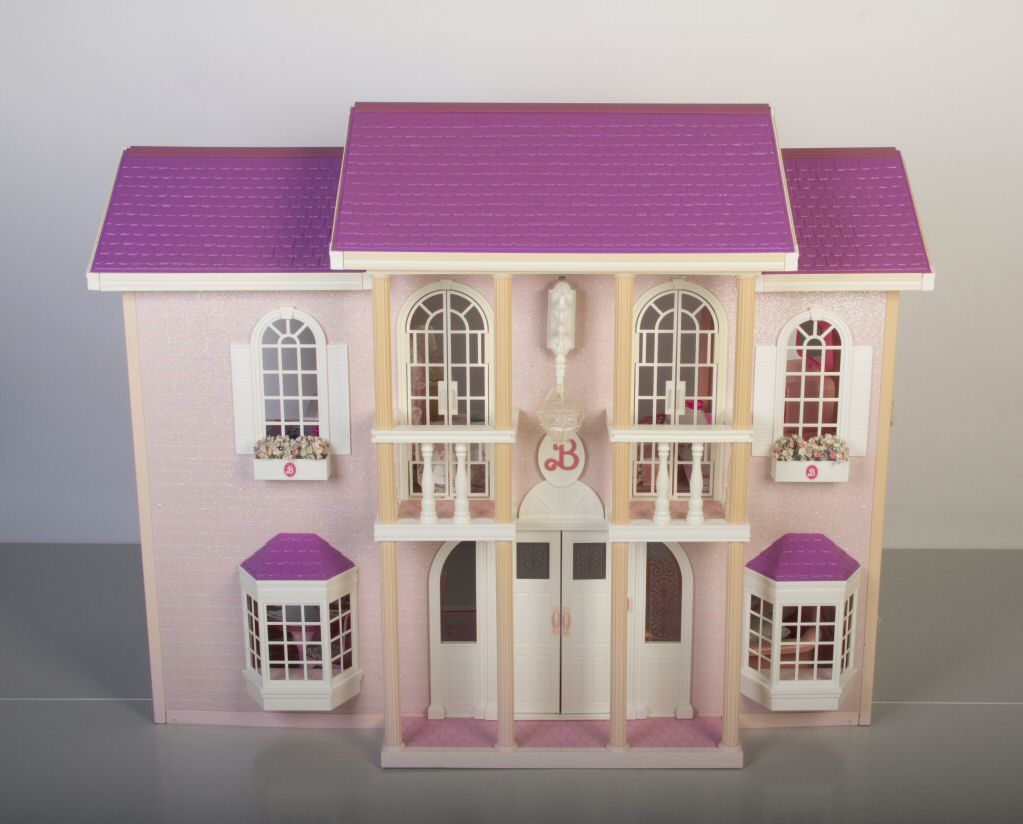 I was assigned to create a fanciful landscape around the prototype, two story mansion, open at its back, sitting tall on a large turntable reveal. One day just before opening, as I worked, the VP of Creative Services came through in anticipation of Jill’s walk-through and stood fretting about the Mansion.
“Hey,” he commanded as I installed shrubbery, “Get some glitter and sprinkle it all over the roof. This wants to be more sparkly.” he pronounced.
Not my job, I asked him, “Will it be coming with glitter on the roof?”, thinking it would be misleading to the customers.
“No, but it needs it. Just do it.”
“But isn’t this a one-of-a-kind prototype? Can we DO that?” I returned.
“It needs it. Just do it.”
Not wanting to take responsibility for altering an expensive, approved prototype, I told him I would advise the Samples Department of his request. They agreed with me and it didn’t happen.
Three days before the show opened, Jill led her royal procession through her kingdom, passing judgement on various aspects of the gallery and leaving people scrambling in her wake. While I worked discretely to the side on the display, Jill entered the room with her retinue attending, including the aforementioned VP with notebook in hand taking down her commandments, along with Rick, who was in charge of the whole gallery, and my boss Alison, the head of the decorator crew.
The entrance was regal with a sparkling new contemporary crystal chandelier dripping from the ceiling and matching wall sconces which had been approved and purchased long before. She briefly paused, taking in the scene, and then, indicating the lighting fixtures, proclaimed, “No! It’s not enough! I want BIGGER! More BARBIE!” emphasizing her meaning with sweeping jazz hands, and then paraded on to the next room.
The next day, now two days before the opening, Rick and Alison spent their entire day, indispensable people needed back in the gallery, wasting their precious final hours combing Manhattan in taxis for fixtures that might pass for “Bigger! More Barbie!”, finally purchasing and renting a range of choices, returning late in the day exhausted. Then they took an electrician off from his already jammed lighting schedule to climb up a ladder and hang, wire up, and light each one, then stand back in exasperated discussion, evaluating its “Barbieness”, continuing late into the night, until, at last, they decided that nothing would suffice. Resigned to spending their final day on another search, they had the electrician re-hang the original set so that other officials walking through would at least see the intention.
The final morning, I was finishing up my display when Jill made a second pass-through with the toady VP, and, upon seeing the SAME chandelier and sconces, proclaimed, “OH YES! That’s MUCH better!” and walked on.
Wow!
She was probably just distracted as she had just given the current president an ultimatum to promote her or she would take an offer from Reebock International and leave. 
Subsequently named co-president, she rose to become CEO, until her ambition drove her to greater and greater acquisitions, overextending the company while greedily snatching up competitors such as Tyco and Fisher-Price, and ruthlessly eliminating upper-level subordinates, leading to the resignation of many top-level Mattel executives during the three years of her tenure as CEO. Her Waterloo was the acquisition of The Learning Company in 1999, which came with a huge debt and ultimately caused the company a loss of $50 million, prompting shareholders and investors to pressure her for her resignation in 2000. Barbie to the end, she received a $1.2 million annual pension as part of a severance package of, ironically, $50 million, the same as the loss.
Some people, honestly…..!
After single handedly tanking the company, she walked with that disingenuous smile and a full purse, leaving the company to regroup into austerity. Sets for packaging and ads were replaced with computer graphics, line presentations became DVD’s, and the Photo Department was pared down, making my services obsolete. Meanwhile, I was still only free-lance and living out of state by then….and the phone stopped ringing.
That’s OK. Seventeen years as Barbie’s personal decorator was quite enough.
I still have our picture from your birthday gala. Thanks for the memories, babe.
 Hunt Travels